
About Sebastian Raschka
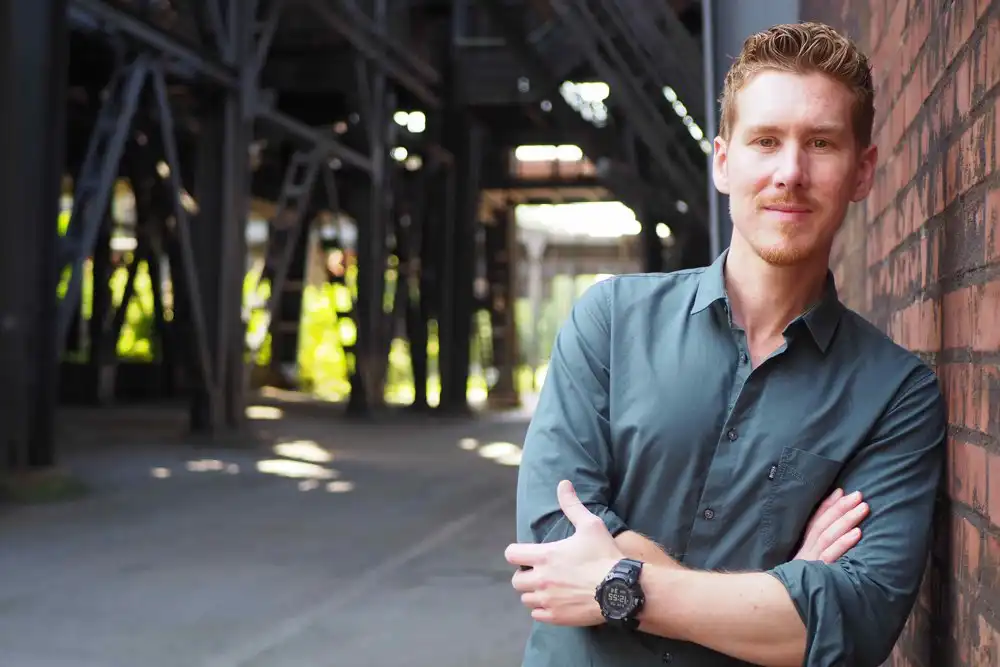
Hi, I’m Sebastian, and I work as an LLM Research Engineer. Most people know me from my books on machine learning and large language models (LLMs).
Most of the LLM content I share is motivated by something I am personally curious about. I read the paper and look at the config or reference implementation. Then, I often I build a smaller version in PyTorch. This is often a fairly manual process, and I like it that way since it’s a good learning experience. Working code doesn’t lie, and it usually requires details that are easy to miss in a diagram.
Lately, this has meant spending most of my time on LLM architectures and some (small-scale) training. I am super interested in inference and evaluation as well, though.
Before moving to industry full time, I was a professor in the Department of Statistics at the University of Wisconsin-Madison. I taught statistics, machine learning, and deep learning there and did research on deep neural networks. Later, I worked as a senior engineer at Lightning AI. My publications page lists my academic work, and LinkedIn has my current CV details.
Can you introduce yourself to my readers? You went from professor to industry researcher to full-time author. What made you leave academia?
Expand answer
Yes, so if we start with my position at UW-Madison, I used to be in the statistics department doing deep learning research, teaching machine learning and deep learning (i.e., AI), writing research grants, and collaborating with colleagues in applied domains (e.g., biological sciences and social sciences).
As you can see, there are a lot of responsibilities and things going on as faculty. I actually really liked the university and my colleagues a lot. And as you may know, I also like teaching a lot. However, 1) I felt stretched very thin in too many directions, where I felt like I never had enough time to do one thing well (research, grant writing, or teaching), 2) teaching the same classes every year was beginning to feel repetitive (I couldn’t imagine doing roughly the same thing for 30 more years), and 3) there was this weird COVID time.
All in all, I thought it might be good for me to change things up and take on something new and get some experience in industry, which is why I joined Lightning AI (a start-up based in New York City) in 2022. Again, I had a great time and liked the work as a Staff Research Engineer and my colleagues a lot. However, approximately 3 years later, I again wanted to try something new, plus I had some health issues, so I first needed to take care of myself and then maybe start something else.
So, that’s how I ended up starting my own little company/self-employment-based venture. By the way, I wouldn’t say I’m a full-time author. I do many things, from implementing various AI-related things in collaborations to making educational videos. But it’s true that there are stretches of time when I do a lot of authoring for many hours a day (both books and my blog).
Source: Excerpt from an interview on September 17, 2026
Where to start
For a bottom-up introduction to LLMs, Build a Large Language Model (From Scratch) builds a GPT-style model and then walks through pre-training and fine-tuning it in PyTorch.
Build a Reasoning Model (From Scratch), which is essentially a sequel to the one above, begins with a pre-trained model and covers inference-time scaling, reinforcement learning, and installation. (My other books are listed on the books page.)
For various short- and long-form articles covering LLMs, deep learning, and more, see the blog and notes archive or the Machine Learning FAQ. The course pages collect lectures and code from current and past courses. I also maintain a Start Here page and a shorter list of favorite (longer-form) articles for readers who would rather browse by topic.
Elsewhere
Most of my open-source code is on GitHub. Google Scholar has the citation records for my papers. I publish longer articles on my Substack blog. Recorded talks and courses are on YouTube, while shorter updates are on X and LinkedIn.